
If AI Agents Are Your Digital Workforce, Agentic Automation Needs a Common Playbook
by Dr. Marlene Wolfgruber, AI Product Marketing Lead
Tech leaders love to promise that agentic automation will transform the enterprise. In theory, AI agents will act like tireless, always-on digital workers, capable of reasoning through complex problems and adapting workflows in real time.
But in practice, we’re seeing a more complicated story. A team of agents often runs into the very issues human teams do: individual workers reach different conclusions about the same problem and adjust workflows in ways that don’t line up.
In fact, businesses are discovering that when AI agents are deployed as a workforce, they inherit the same challenges of messy human organizations: miscommunication, misalignment, and the inevitable missteps that follow.
That’s what agent operations (AgentOps)—the emerging discipline of managing, monitoring, and governing AI agents at scale—seeks to remedy.
The rise of AgentOps
A recent TechRadar op-ed raised a striking point: If enterprises want autonomous agents to behave responsibly, the agents need to be onboarded and managed, much like new hires who technically know what to do but still need guidance. AgentOps is becoming essential for providing that oversight.
But early deployments show that oversight alone isn’t enough. Another fundamental issue is that different agents working on the same task often don’t agree on what they’re seeing. Five agents can read the same document and interpret it five different ways. Their sense of process order can fall out of sync. They start to resemble a collection of lone operators rather than a coordinated system.
This is forcing a shift in how AgentOps is understood. While emerging AgentOps tools focus on logs, analytics, health monitoring, and guardrails, these features mostly treat the symptoms of agent misbehavior rather than the cause.
To make agentic automation truly dependable, AgentOps needs to offer a shared intelligence layer as a foundation so agents working in a team interpret information and workflows the same way.
When agents don’t share the same view, AgentOps falls apart
One of the clearest patterns emerging in early deployments is how easily AI agents can be thrown off by inconsistent or poorly extracted document data. When agents read a document differently, every decision that follows becomes unpredictable. Once multiple agents begin working together, those small discrepancies compound.
Imagine an insurance claim, for example. One agent reads 07/03/23 as March 7, another as July 3. A third interprets the year as 1923, not 2023. Once these mismatched interpretations flow into eligibility checks and customer responses, the entire workflow drifts because the agents never started with the same view of the document.
This is why Document AI is becoming a prerequisite for AgentOps. It gives AI agents shared perception: a consistent way to interpret unstructured content, extract information with awareness of both layout and meaning, and validate what was captured. It also creates an audit trail, making it clear what data an agent relied on and why.
Taken together, these capabilities form a standardized perception layer, so every agent starts from the same understanding of the information in front of them.
Without shared process context, AI agents drift
Shared perception standardizes what agents see. But to act reliably, agents also need a shared understanding of the process they’re operating within.
Take a claims workflow. An agent might correctly extract all the information from a claim form, but still not know the next best step: Should it validate coverage or check for fraud? Would it be better to route the case for manual review? Even with perfect data extraction, the sequence of actions can start to drift.
This is where process intelligence can provide the missing structure. By showing how a process runs step by step, it gives AgentOps a shared view of the workflow they’re moving through. It also creates a record of which agent did what. With it, agentic automation becomes more predictable and easier to govern.
AgentOps as governance and intelligence
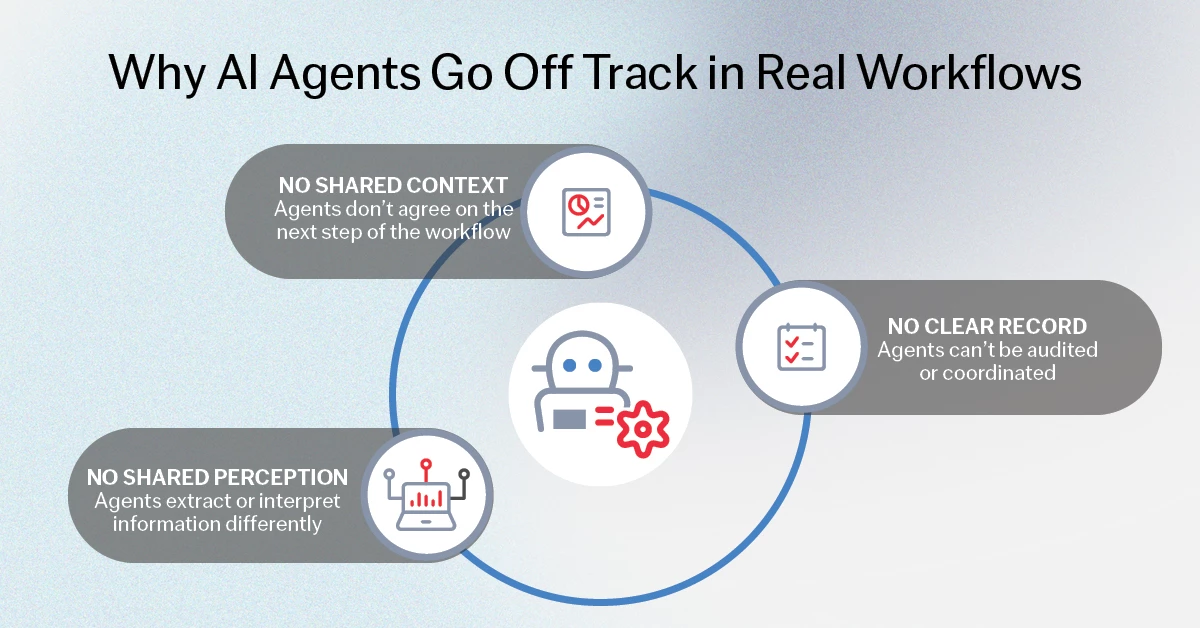
Enterprises employing teams of AI agents for agentic automation need a framework for safe, trustworthy, enterprise-grade autonomy. That requires three foundational layers:
- Shared perception: Agents see and interpret documents the same way.
- Shared process intelligence: Agents understand the same workflow and share the same rules, in line with how the business actually operates.
- Shared guardrails: Agents make decisions that can be monitored, explained, and improved.
When these layers work together, AgentOps becomes the operating system for autonomous work. Agents are equipped with the structure they need to make fast, intelligent decisions.
The playbook for enterprise-ready AgentOps
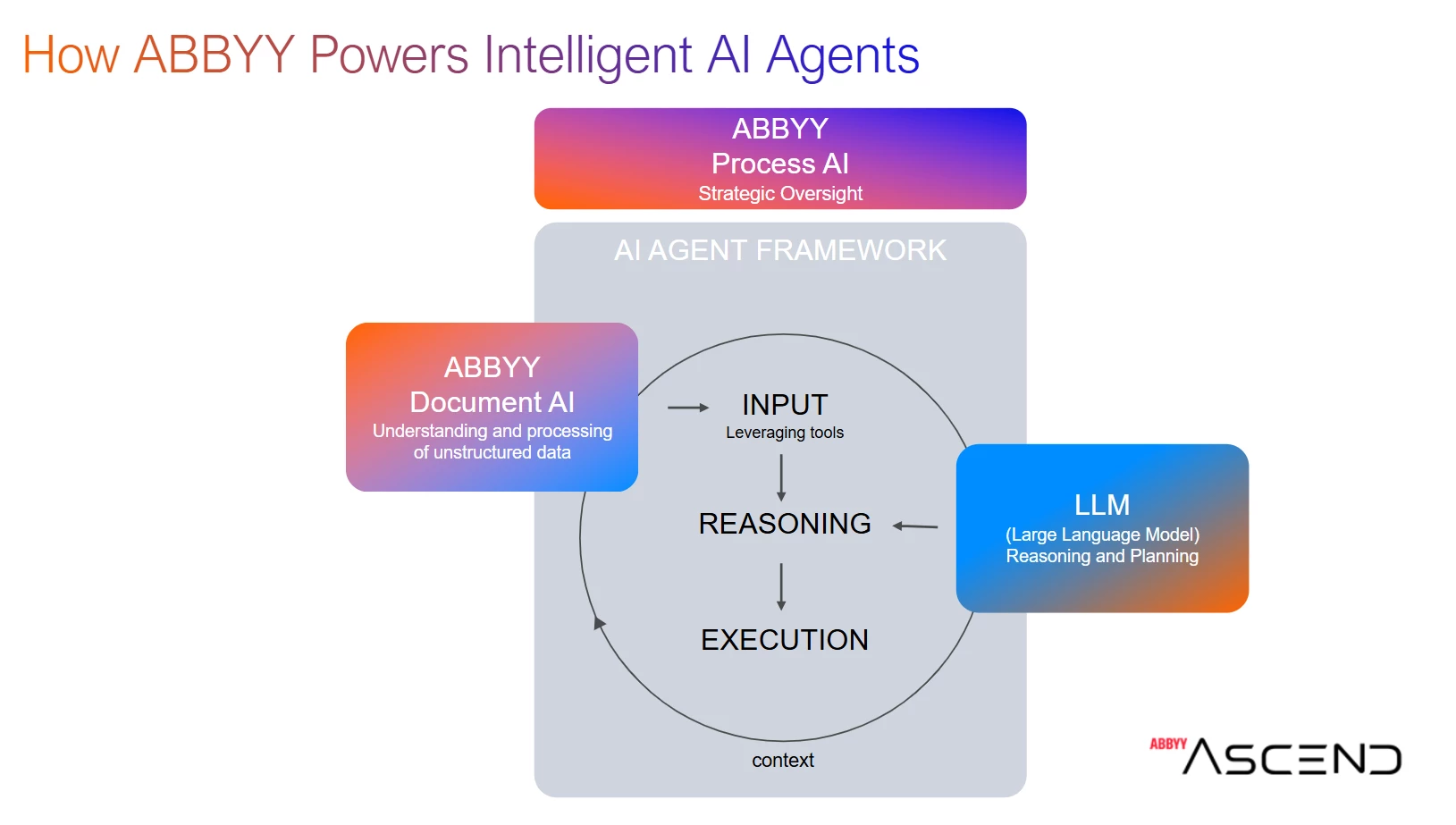
Enterprises ready to move from demos to real deployments can follow four practical steps for successful agentic automation:
- Give agents consistent, reliable document data: Use a reliable Document AI solution so agents are all looking at the same information, pulled accurately and with a clear record of how it was extracted.
- Provide agents with a shared map of the process: Apply process intelligence so agents can use the workflow’s actual structure to determine the right next action.
- Build AgentOps on top of this shared understanding: When agents see the same data and follow the same process, oversight and coordination stop feeling like guesswork.
- Rely on a hybrid approach: Pair structured extraction and business rules with agentic reasoning, rather than letting large language models (LLMs) operate on their own.
Agentic automation is now moving out of the demo phase and into day-to-day operations. With that, expectations are shifting too. Beyond just efficiency, leaders want to trust that agents can make smart decisions that deliver measurable business results—and be able to explain their reasoning.
That will only happen if agents are grounded in a shared perception and context of the documents and processes they’re acting on. Once we have that foundation, agentic automation will become something companies can truly scale with confidence.