With just a few clicks, anyone can copy and paste an article into a generative AI tool and produce another in a similar style. Picking out the original often isn't easy, as popular AI-writing detection quizzes have proven.
Duped copy is harmless when it's just a game, but a serious problem for financial institutions when it comes to identity documents. Creating a fake ID used to take specialized skills and materials. In the age of mobile onboarding, however, physical materials are no longer necessary, and digital documents can be reproduced quickly and cheaply.
Driver's licenses, bank statements, pay slips, and the like are now extremely easy to doctor, thanks to AI. Templates can be cloned, bank statements altered, and metadata tampered with at a speed and scale that traditional fraud controls were never designed to handle.
Even for experienced analysts, sophisticated document fraud isn't easy to spot at a glance. Yet unfortunately, fraud review processes haven't evolved as quickly as fraudsters have.
The problem isn't just that fake documents are easier to create, but also the sheer volume of documents entering financial institutions today. Document fraud detection teams are expected to parse screenshots, poor-quality scans, and inconsistent formats coming in through onboarding flows while relying on fragmented, manual processes.
Legacy systems just weren't built to handle this volume or complexity. At the most basic level, traditional fraud prevention works too slowly to meet the expectations of modern customers, who expect fast, easy digital onboarding.
Speed, however, isn't the biggest concern. The more urgent issue is that traditional review processes often can't spot the type of fraud that's becoming increasingly common today. Many traditional review processes tend to be rules-based, relying on manual inspection. But in a world where continually changing documents come in from around the globe, distinguishing legitimate records from manipulated ones is no simple task. That's especially true of digital manipulations like metadata tampering and layered edits that are almost invisible to the human eye.
More fundamentally, many fraud detection workflows are set up as a series of disconnected tasks. Identity verification data may sit in one platform, isolated from document review results. Yet detecting synthetic identities and AI-assisted scams increasingly requires continuous visibility across the entire customer journey.
Detecting AI-powered fraud requires the help of AI-powered fraud detection tools that can handle high volumes of documents accurately while connecting and cross-checking information. Essentially, fighting modern fraud requires Document AI enhanced by sophisticated document forensics.
Document AI combines optical character recognition (OCR) with intelligent data extraction to process a wide variety of documents at volume with high accuracy. Combining Document AI with document forensics brings speed and precision to the fraud detection workflow.
Process-aware systems can look across the whole workflow to cross-validate information between onboarding, identity verification, transaction activity, and other stages of the customer journey. That broad visibility helps identify anomalous workflows and synthetic identities that isolated review processes might miss.
Most importantly, Document AI allows fraud detection teams to get out from under the endless alerts and overwhelming document volumes so they can focus on the true risks that deserve attention.
Document AI can extract, cross-check, and confirm data from key documents
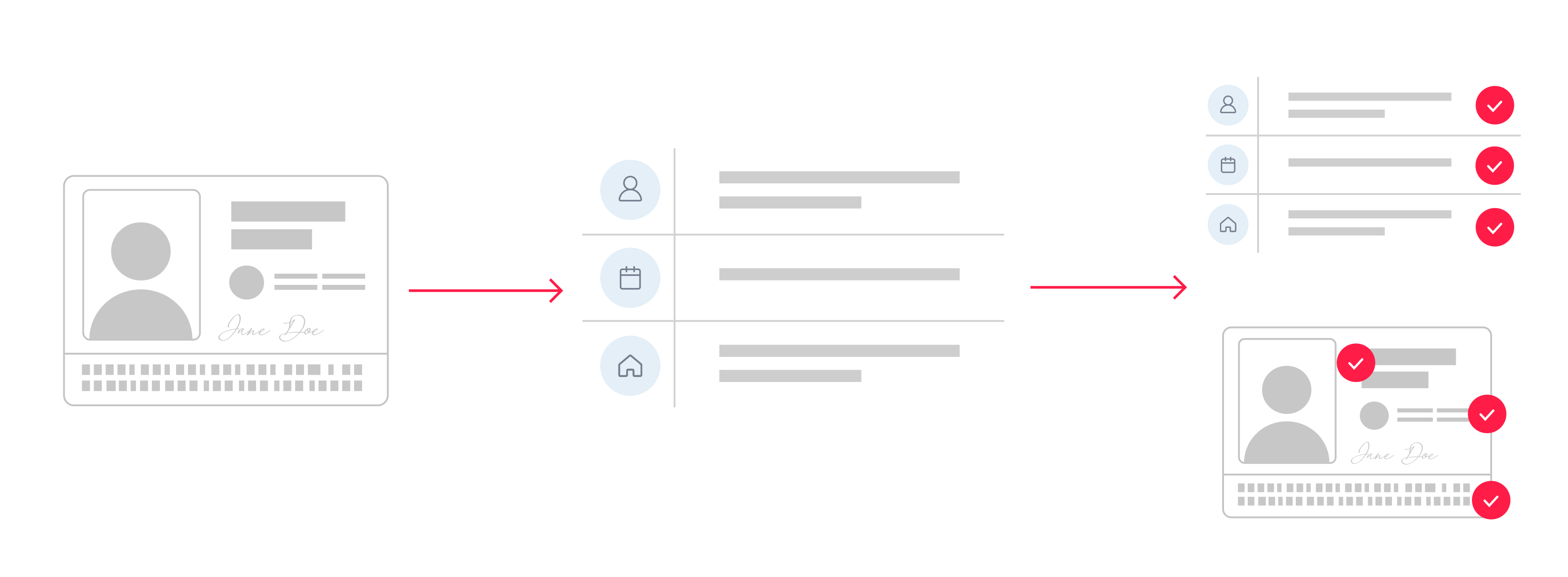
Because Document AI handles the repetitive verification tasks to filter through huge numbers of incoming documents, it essentially acts as triage. It cuts through the noise to call attention just to the cases that require human-in-the-loop (HITL) review. With only the exceptional cases escalated to their attention, analysts can spend time on contextual interpretation, with the time to exercise judgement and escalate as necessary.
Document AI with HITL review fundamentally changes fraud prevention from reactive to proactive. Traditional fraud teams often investigate suspicious activity after something has already gone wrong, but intelligent workflows shift detection much earlier in the process. Risks can be identified as documents are ingested during onboarding, often long before fraud turns into financial loss.
The visibility can also become continuous with Process AI technologies. Real-time risk scoring helps spot irregular activity earlier to reduce downstream investigation costs. Fraud detection goes from looking at one-time snapshots to understanding suspicious behavior patterns as they come up.
As AI-generated fraud continues to accelerate, the organizations best positioned to deal with it will combine the machine-scale speed and pattern recognition of automation alongside human judgment and investigative expertise.
Get updated on the latest insights and perspectives for business & technology leaders
