
Every business has to deal with utility bills. For years, this steady stream of paperwork was handled by humans with spreadsheets—and in many organizations, still is. The manual process is slow, boring, and not particularly reliable, since a single typo can create big consequences.
But automation can completely reshape this business process. Automated utility bill data extraction offers more accuracy, processing these documents at much faster speeds and lower costs. In addition, for businesses that handle Know Your Customer and customer onboarding, automated utility bill extraction can also help perform proof of identity, income, and residency checks, thus accelerating and enhancing customer service, while improving fraud prevention measures.
This type of automation is part of a broader category called Document AI, or intelligent document processing (IDP), that uses AI to read, extract, and move data from documents into your business systems. Let’s look at how this technology works and what it can do for your business.
Jump to:
What automation looks like for utility bill data extraction
Why traditional/manual data extraction doesn't work anymore
Business impact of automating utility bill data extraction
How automated data extraction works
What automation looks like for utility bill data extraction
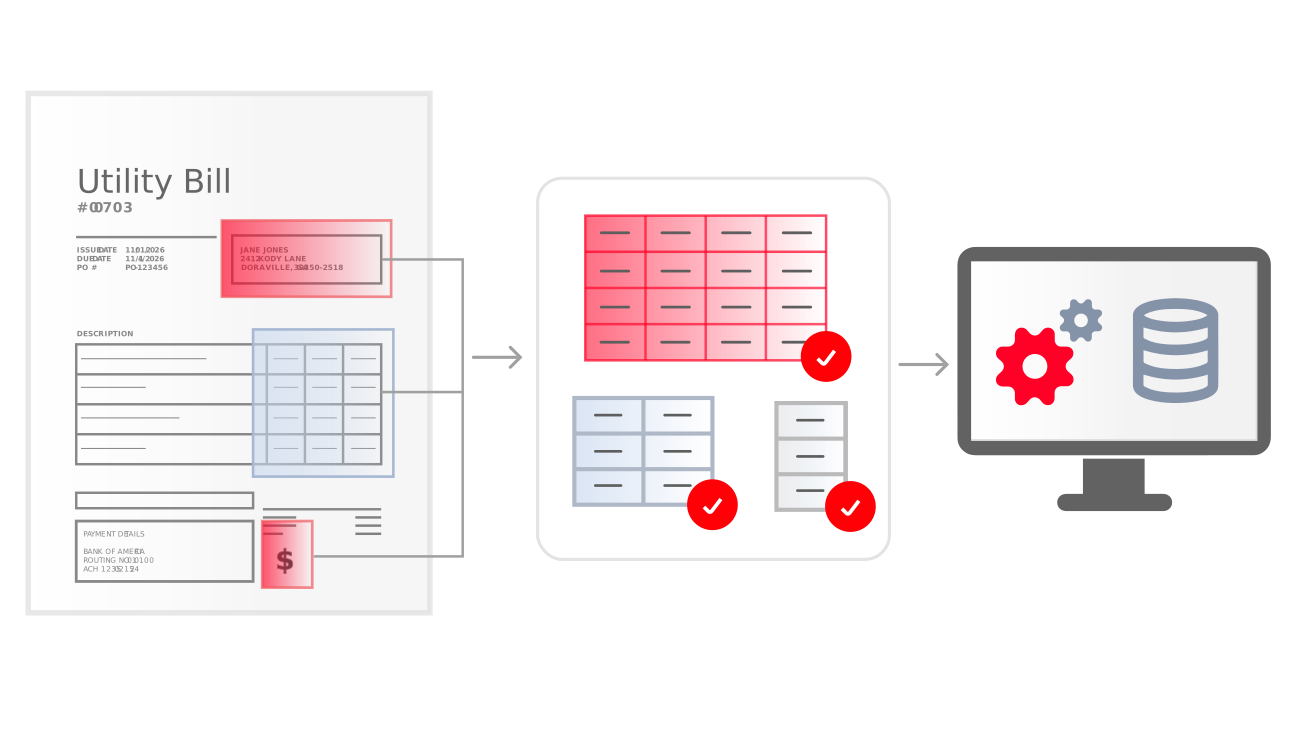
Automated utility bill extraction uses AI-powered document models—pre-configured extraction models that know how to read and extract specific information from certain types of documents—to identify and capture key information from bills.
Instead of requiring an employee to type information into your business systems, an IDP workflow can automatically extract and validate that data, then pass it on to downstream systems.
Why traditional/manual data extraction doesn't work anymore
Manually typing data from your utility bills slows your business down and introduces risks that only grow as the volume of documents increases. Here’s why companies are automating this process:
- Time-consuming and inefficient: Whole teams can spend days retyping billing periods and account numbers, stealing hours from work that actually matters.
- Poor scalability: As the volume of bills grows, the only ways to keep up manually are hiring more people or outsourcing the work. Otherwise, your company can fall behind and lose money on late fees.
- Prone to human error: Tired people tend to make mistakes, yet a small error in a utility bill can mean paying money you don’t owe.
- Compliance headaches: Manual re-keying muddies audit trails and increases the chance of errors. This combination can quickly turn into regulatory trouble.
Business impact of automating utility bill data extraction
Organizations that move to automation speed up bill processing, but more importantly, fundamentally change how bills get processed. By using IDP to automate data extraction from utility bills, companies see benefits such as:
- Faster invoice and bill processing: Automating data extraction for utility bills often cuts processing times by 80–90%.
- Higher accuracy and compliance: The precision of automation combined with built-in validation rules and audit trails means fewer mistakes and a cleaner audit record if regulators come knocking.
- Lower operating costs:Automation can be accomplished in minutes what used to take days for manual entry staff. Employees are freed up to focus on higher-value work.
- More timely data: When bills are processed in minutes instead of weeks, finance teams get a live view of utility spending and cash flow and are better able to make time-sensitive decisions.
- Scalability: Automated data extraction can easily process higher volumes of bills without making you worry about overtime pay or bringing on new hires.
- Enhanced customer service and satisfaction: Automated utility bill processing streamlines "proof of" workflows, significantly reducing turnaround times for customer requests and improving overall service quality.
How automated data extraction works
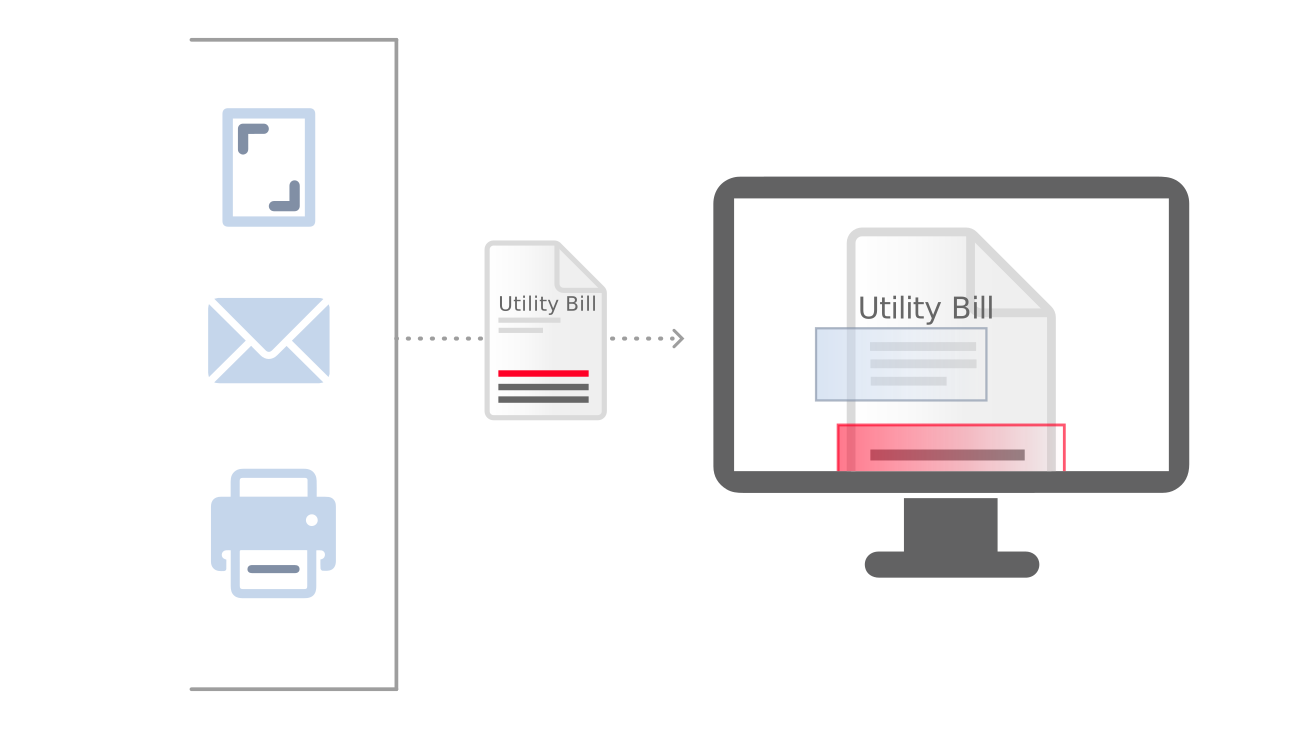
Data extraction is just one stage in a larger IDP workflow. IDP handles every part of the journey from when a bill first arrives to when the verified data lands in your business systems. Here’s how the full cycle works:
- Document ingestion and preprocessing: Documents that arrive as scanned files, email attachments, paper mail, or other formats are collected and cleaned up for better accuracy.
- Document classification and splitting: AI models recognize utility bills and separate them from other document types. If a file contains multiple bills bundled together, the system automatically splits them into individual documents.
- Data extraction: The system extracts key data points such as billing periods, issuers, customer details, and line-item charges.
- Data validation and normalization: Extracted data is checked for accuracy, consistency, and compliance with business rules.
- Human-in-the-loop (HITL) exception handling: When automation encounters edge cases, exceptions are flagged for expert review to maintain accuracy and compliance.
- Integration and export: Validated data is exported into downstream systems such as ERP, accounting, or analytics platforms.